Free UK Next-Day Delivery on Orders Over £50

Expert advice by Seamus O'Brien2026-05-075 min read

Best Tyre Inflator UK 2025: Top-Rated Cordless, 12V, and Digital Pumps for Cars & Bikes

A hands-on buyer's guide comparing the UK's leading tyre inflators by power source, vehicle compatibility, and technology — covering cordless, 12V, digital, and CO2 options from PCL, Ring, AA, Michelin, and DeWalt.

Why Every UK Driver Needs a Tyre Inflator in 2025

Flat spare tyres are basically extinct on new cars. Since most manufacturers switched to tyre repair kits and run-flats, owning a decent portable inflator isn't optional anymore — it's essential kit. I keep one in the boot of my car and another in the van I use for work. Living up the Antrim Road, I've had more than one early morning where I've walked out to a soft tyre in the cold and been grateful I didn't need to hunt for a petrol station air pump that actually works.

Finding the best tyre inflator UK buyers can rely on means cutting through a lot of noise. Dozens of brands, wildly different specs, and price points from £20 to £150+. So what actually separates a good inflator from a useless one?

Three things: accuracy (±1 PSI or better), inflation speed (litres per minute), and build quality that survives bouncing around your boot for years. The UK Government's guidance on tyre safety is clear — underinflated tyres increase stopping distances and fuel consumption. Checking pressures monthly is the minimum standard.

Cordless vs 12V Tyre Inflators: The Best Choice for UK Drivers

Technical comparison infographic between cordless and 12V tyre inflators

This is the first decision you'll face, and it matters more than most people think.

12V (Cigarette Lighter) Inflators

Plug into your car's 12V socket. Unlimited runtime as long as the engine's running. Typically cheaper — decent ones start around £30-£45. The downside? You're tethered to the vehicle. Useless for inflating anything away from the car. And honestly, some of those cables are frustratingly short.

Cordless (Battery-Powered) Inflators

Total freedom. Use them anywhere — garage, shed, roadside, even on the bike before a Sunday spin. The trade-off is battery life. Most cordless units manage 4-6 car tyres from flat on a single charge. Premium models using 18V tool batteries can do significantly more.

My take? If you already own cordless power tools, a cordless inflator that shares the same battery platform is a no-brainer. You've already got the batteries. If you don't, a solid 12V unit will serve most drivers perfectly well., a favourite among Britain’s tradespeople

Quick comparison: 12V inflators average 25-35 litres/min airflow. Cordless units typically deliver 10-20 litres/min but offer portability that 12V simply can't match.

Best Cordless Tyre Inflators UK 2025

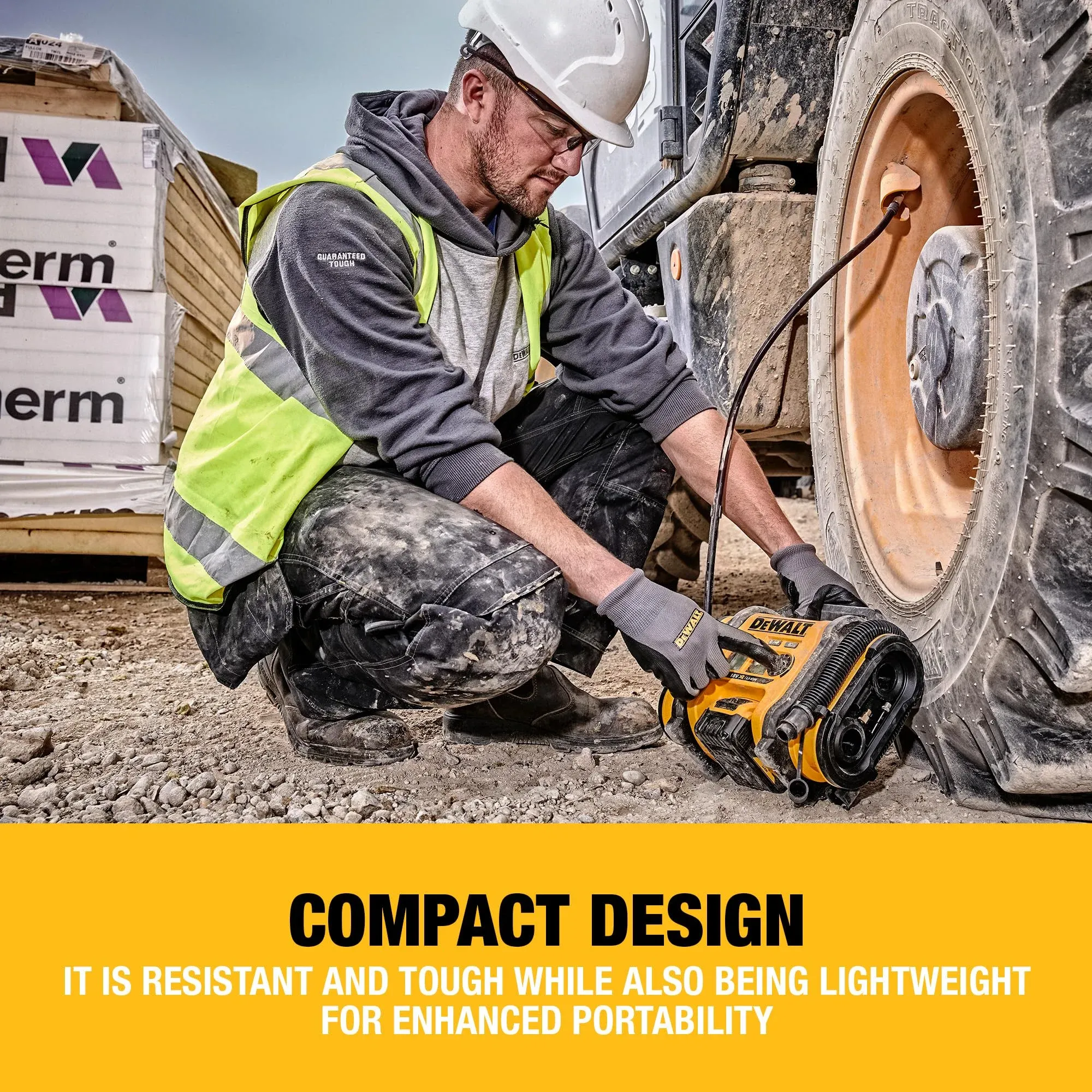
Cordless DEWALT tyre inflator being used for quick roadside maintenance

The cordless market has exploded this year. Here are the standout performers I'd actually recommend.

DeWalt 18V XR Compact Inflator — £114.34

This is the one I reach for most. The DeWalt 18V XR inflator runs on three power sources: 18V XR batteries, 12V vehicle outlets, or 240V mains. That triple-source flexibility is genuinely rare. For anyone already invested in the DeWalt 18V ecosystem — and that's half the tradespeople I know — it slots straight into your existing kit.

Key specs: Digital gauge accurate to ±1 PSI, auto-shutoff at target pressure, LED work light, max pressure 150 PSI. Compact enough to live permanently in the boot without eating up space.

Worth the extra spend over budget options? Absolutely. The build quality is night and day compared to the £30 units I've burned through over the years.

Ring RTC4000 Cordless Digital Inflator — ~£55

Ring's been winning awards for years and the RTC4000 deserves the praise. Built-in rechargeable battery, digital preset, and a decent 22 litres/min flow rate. It won't inflate as fast as the DeWalt, but for most car owners who just need monthly top-ups, it's spot on.

Michelin Cordless Rechargeable Inflator — ~£65

Michelin's brand carries weight for good reason. Their cordless unit offers USB-C charging (finally), a backlit digital display, and preset memory for up to 3 tyre pressures. A solid mid-range choice that covers most households without fuss.

Best 12V Tyre Inflators for Cars & 4x4s

12V tyre inflator connected to a vehicle power socket for continuous use

If you want raw inflation speed and don't mind the cable, 12V compressors still dominate for larger vehicles., meeting British quality expectations

Ring RTC1000 — ~£40

The RTC1000 claimed Auto Express Best Tyre Compressor 2024 for the fourth consecutive year. That's not a fluke. It delivers 35 litres/min, handles tyres up to 100 PSI, and the digital gauge is accurate within ±1 PSI. For a 4x4 or SUV owner, this is the benchmark.

AA 12V Digital Tyre Inflator — ~£30

Budget-friendly and reliable. The AA unit won't blow you away with features, but it does the job without fuss. 3-metre cable, digital display, auto-shutoff. Decent bang for your buck if you just need something that works.

PCL Airforce MK4 — ~£90

PCL supply professional garage equipment across the UK. Their Airforce MK4 is built to a different standard — metal construction, calibrated gauge, and the kind of durability you'd expect from workshop-grade kit. Overkill for most? Probably. But if you want something that'll last a decade, this is it. PCL's equipment meets BSI quality standards, which gives genuine confidence in accuracy.

Best Tyre Inflators for Bikes & Motorcycles

Smaller tyres need different considerations. You want precision at lower pressures and adaptors that actually fit Presta and Schrader valves without leaking.

For Motorcycles

Motorcycle tyres typically run 28-42 PSI. Any quality digital tyre inflator with auto-shutoff works brilliantly here. The DeWalt 18V XR is my pick because it's portable enough to carry on longer rides. The compact size fits in a pannier without drama.

For Bicycles

Road bike tyres need 80-130 PSI. That rules out most cheap 12V compressors which max out at 100 PSI. CO2 inflators remain popular for roadside emergencies — a 16g cartridge fills a 700c tyre in seconds. For home use, though, a digital pump with a Presta adaptor saves money long-term.

CO2 Inflators: Quick Fix or Proper Solution?

CO2 cartridges are single-use, cost £2-4 each, and the gas permeates through rubber faster than air. They're emergency tools, not maintenance tools. I keep one in my cycling bag but wouldn't rely on them as a primary inflator. That said, for competitive cyclists mid-race, they're unbeatable. Context matters., popular across England

Best Tyre Inflator UK: Head-to-Head Comparison

Comparison chart of the top-rated tyre inflators available in the UK for 2025
Model Power Source Max PSI Flow Rate Price (2025) Best For
DeWalt 18V XR Inflator 18V / 12V / 240V 150 PSI ~20 L/min £114.34 Trade use, multi-vehicle
Ring RTC4000 Cordless (built-in) 150 PSI 22 L/min ~£55 General car use
Ring RTC1000 12V 100 PSI 35 L/min ~£40 SUVs, 4x4s, fast inflation
Michelin Cordless Cordless (USB-C) 150 PSI 18 L/min ~£65 Everyday drivers
AA Digital 12V 12V 100 PSI 28 L/min ~£30 Budget buyers
PCL Airforce MK4 12V 150 PSI 40 L/min ~£90 Professional/workshop

Buying Guide: What Actually Matters When Choosing a Tyre Pump

I've wasted money on cheap inflators that died within months. Here's what I look for now after years of trial and error.

Accuracy

A gauge that's off by 3-4 PSI defeats the entire purpose. Look for units with ±1 PSI accuracy or better. Digital gauges are generally more reliable than analogue dials. Which? consumer testing consistently shows that branded units outperform unbranded imports on gauge accuracy.

Auto-Shutoff

Set your target pressure, press start, walk away. The inflator stops automatically when it hits the number. This isn't a luxury feature — it prevents over-inflation, which is genuinely dangerous. Every model I've recommended above includes this.

Inflation Speed

Measured in litres per minute (L/min). For car tyres, anything above 20 L/min is acceptable. Below that and you're waiting 4-5 minutes per tyre from flat. 12V units typically push 28-40 L/min. Cordless units sacrifice speed for portability — that's the trade-off.

Build Quality & Duty Cycle

Cheap compressors overheat after 10-15 minutes of continuous use. Quality units like the DeWalt inflator pump are rated for extended duty cycles. If you're inflating multiple vehicles or large 4x4 tyres, this matters enormously.

Valve Adaptors

Make sure your inflator includes Presta, Schrader, and sports ball adaptors. Most do. Some don't. Check before buying — especially if you've got bikes in the household.

Pro tip: Store your inflator in the boot, not the garage. A flat tyre doesn't wait until you're at home. I learned this the hard way on the M2 near Sandyknowes roundabout at 6am on a January morning.

Frequently Asked Questions

What PSI should car tyres be inflated to in the UK?

Most UK cars require between 30-36 PSI, though this varies by vehicle and load. Check the sticker inside your driver's door frame or fuel filler cap for manufacturer-recommended pressures. Front and rear tyres often have different target pressures, typically differing by 2-4 PSI depending on weight distribution., with availability in Scotland

Are cordless tyre inflators powerful enough for SUVs and 4x4s?

Yes, but they're slower. A cordless inflator at 20 L/min takes roughly 5-6 minutes to fill a large SUV tyre from flat. A 12V unit at 35 L/min does it in about 3 minutes. For regular top-ups of 5-10 PSI, cordless units handle SUV tyres without issue. The DeWalt 18V XR manages 4x4 tyres comfortably on a 5.0Ah battery.

How accurate are digital tyre inflator gauges?

Quality digital gauges from brands like Ring, DeWalt, and PCL are accurate to ±1 PSI. Budget unbranded units can be off by 3-5 PSI, which is significant enough to affect handling and fuel economy. Calibrated professional units like the PCL Airforce achieve ±0.5 PSI accuracy, meeting workshop-grade standards.

Can I use a tyre inflator for bike tyres, footballs, and air beds?

Absolutely. Most quality inflators include adaptors for Presta valves (road bikes), Schrader valves (mountain bikes and cars), sports balls, and inflatables. Check the maximum PSI — road bike tyres need 80-130 PSI, so budget inflators capped at 100 PSI won't suffice. The DeWalt unit reaches 150 PSI, covering all applications.

Is it worth paying over £100 for a tyre inflator?

For trade professionals or multi-vehicle households, yes. Premium inflators like the DeWalt 18V XR at £114.34 offer triple power sources, superior build quality, and longer duty cycles. For a single car owner doing monthly checks, a £40-65 unit from Ring or Michelin provides excellent value. The premium models justify their cost through durability and versatility over 5-10 years of use.

How often should I check my tyre pressure?

Check tyre pressure at least once a month and before any long journey. Tyres naturally lose 1-2 PSI per month through permeation. The HSE recommends checking pressures when tyres are cold — ideally before driving or after less than 2 miles. Under-inflated tyres increase fuel consumption by up to 3% and significantly extend braking distances.

Key Takeaways

  • Best overall tyre inflator UK 2025: The DeWalt 18V XR Compact Inflator (£114.34) offers unmatched versatility with triple power source compatibility and 150 PSI maximum pressure.
  • Best budget option: The AA 12V Digital Inflator at ~£30 delivers reliable performance for single-car households on a tight budget.
  • Best 12V for speed: Ring RTC1000 (~£40) pumps 35 L/min and has won Auto Express Best Compressor four years running.
  • Cordless suits tool owners: If you've already got 18V batteries from any major platform, a compatible inflator saves money and storage space.
  • Accuracy matters more than speed: A gauge that's off by 3+ PSI makes the whole exercise pointless — always choose ±1 PSI accuracy or better.
  • Check pressures monthly: Tyres lose 1-2 PSI naturally each month. A 5-minute check prevents uneven wear, poor handling, and increased fuel costs.
  • Store it in the boot: The best inflator in the world is useless sitting in your garage when you get a flat 30 miles from home.

Ready to equip your van with {brand_name}?

Upgrade Your Kit — £296.80