Best Cordless Tyre Inflator UK: DEWALT XR Guide
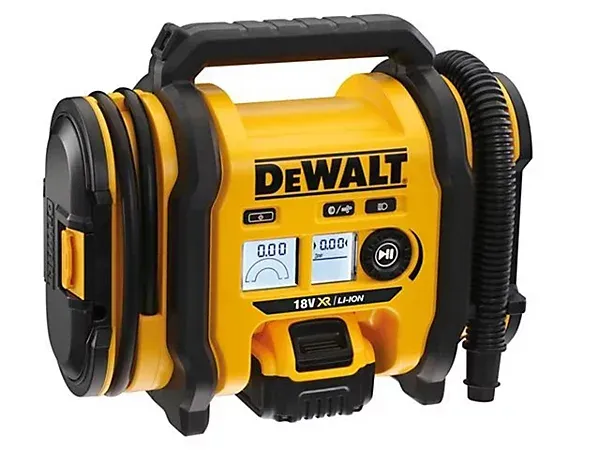
Picture the scene: it is 6:30am, you are heading to site, the van is loaded, and the tyre pressure warning light appears just as you pull away. Or perhaps you are on a family run down the M6, the weather turns, fuel costs are already high, and one soft tyre starts affecting handling and economy. In both cases, the difference between a minor delay and a full-blown disruption often comes down to one thing: having a reliable cordless tyre inflator to hand.
For UK drivers, tradespeople and fleet users, the best cordless tyre inflator UK buyers can choose is not just about convenience. It is about keeping moving, avoiding downtime, maintaining tyre safety and getting professional-level performance without relying on a forecourt airline or a trailing cable. That matters even more in Britain, where motorway services are not always close, roadside weather can change quickly, and work vehicles are expected to be ready every day.
At DeWalt Portable, our focus is simple: Best Professional Tyre Inflators UK. The reason DEWALT XR inflators stand out is equally simple. They are built for the real world: site work, roadside emergencies and everyday vehicle maintenance, with the practical advantage of being powered by your DEWALT 18V XR Li-Ion battery. That means less downtime, less kit duplication and a better fit for professionals already invested in the DEWALT ecosystem.
This guide explains what makes a premium inflator worth buying, how digital auto-stop models compare with cheaper alternatives, and why so many UK users now see the DEWALT 18V XR inflator for car tyres as a smarter long-term investment than a budget compressor. If you are weighing up the best portable air compressor for car tyres UK drivers can depend on, this is the detailed guide to read before you buy.
Key Takeaways
- A cordless inflator is one of the most practical safety and uptime tools a UK driver or tradesperson can own.
- The best models combine digital pressure control, auto-stop accuracy, portability and enough output for car and van tyres.
- DEWALT XR inflators are especially strong for users already on the 18V XR battery platform, reducing total ownership cost.
- Compared with many 12V-only and budget inflators, premium cordless units offer faster deployment, better durability and less faff in poor weather or on site.
- Correct tyre pressure supports safety, braking, tyre life and fuel efficiency. According to TyreSafe, under-inflated tyres can increase fuel consumption and wear more quickly, while over 27% of UK motorists are driving on at least one illegal or dangerously under-inflated tyre according to its survey data.
- If you want a digital tyre inflator with auto stop UK buyers can trust, paying for a professional-grade model is often cheaper over time than replacing low-cost compressors.
Why UK drivers and tradespeople need a reliable cordless tyre inflator
Tyre press not a niche concern. It affects safety, running costs and reliability every single day. In the UK, where wet roads, potholes, cold snaps and heavily loaded vans are common realities, tyres can lose pressure gradually without being noticed until a dashboard warning appears or handling changes.
That matters because under-inflated tyres run hotter, wear unevenly and can increase stopping distances. They also raise rolling resistance, which means more fuel or battery energy is used to cover the same distance. TyreSafe, one of the UK’s leading tyre safety organisations, has repeatedly highlighted the scale of the issue, with survey findings showing millions of motorists are driving with at least one tyre below a safe legal standard. That is not just an inconvenience; it is a road safety problem.
For tradespeople, the consequences can be even more immediate. A low van tyre can delay an entire day’s work, especially if you are carrying tools, stock or materials and cannot risk driving on an under-inflated tyre. A cordless inflator gives you control at the point of need. You are not searching for a garage, feeding coins into a forecourt machine, or draping a cable around a muddy vehicle on a wet morning.
There is also a practical UK roadside angle. The NHS advises keeping an emergency kit in your vehicle, especially in winter, and a tyre inflator sits naturally alongside jump leads, a torch and a warning triangle. While a portable inflator is not a substitute for a safe spare or professional repair when a tyre is damaged, it is highly useful when pressure loss is manageable and you need to restore the correct PSI to continue safely.
For many buyers, this is where a premium cordless model earns its keep. It removes friction. It is there when needed, quick to set up, easy to read and far less awkward than old-fashioned compressors. That is why the best cordless tyre inflator UK shoppers are looking for is usually the one that actually gets used regularly, not the one left in a boot under a tangle of cables.
What to look for in the best cordless tyre inflator in the UK
Not all inflators are built to the same standard, and spec sheets can be misleading if you do not know what matters in day-to-day ownership. If you are comparing products, these are the features that genuinely separate a dependable tool from a disposable gadget.
Digital pressure setting and auto-stop
The best modern inflators allow you to dial in the required PSI, BAR or kPa, start inflation, and let the machine stop automatically at the target pressure. This is more than a convenience feature. It improves consistency, reduces the risk of over-inflation and makes top-ups much easier in bad light or poor weather.
For users searching for a digital tyre inflator with auto stop UK retailers can supply quickly, this should be near the top of the checklist. Analogue gauges and manual stop units can work, but digital control is faster, clearer and generally more confidence-inspiring.
Battery platform compatibility
If you already use DEWALT 18V XR tools, battery compatibility is one of the strongest reasons to buy within the same ecosystem. A tool-only inflator can be far better value than a standalone compressor with its own charger, battery format and replacement parts trail. For professionals, fewer battery systems means less clutter in the van and lower long-term cost.
Pressure range and real-world suitability
Car tyres are only one use case. Many UK buyers also need to top up van tyres, bike tyres, footballs, wheelbarrow tyres and inflatable gear. A good inflator should handle these tasks without drama. The important point is not just headline maximum PSI, but how well the unit performs under realistic conditions: repeated top-ups, cold mornings, and heavier-duty tyres.
Portability and deployment speed
When pressure drops unexpectedly, you want a tool that is ready in seconds. Cordless design wins here because there is no need to find a 12V socket, keep the engine running, route the cable or deal with limited reach. A compact body, onboard accessory storage and intuitive controls all make a difference in actual use.
Build quality
Cheap inflators often look acceptable online but reveal their weaknesses quickly: brittle hoses, vague buttons, poor gauges, excessive vibration and motors that struggle after repeated use. For site work and frequent vehicle maintenance, robust casing and proven tool-brand engineering matter.
Readable display and lighting
UK winter mornings, evening breakdowns and dim car parks are not ideal conditions for tiny backlit screens. A bright digital display and integrated LED light can make inflating a tyre much safer and less stressful.
Accessories and versatility
A strong inflator package should cover Schrader valves for car and van tyres, plus adapters for bikes, inflatables and sports equipment. That versatility increases the odds that the tool will earn its place in your vehicle or workshop.
DEWALT XR inflators explained: features, battery ecosystem and tool-only value
DEWALT has built its reputation in the UK on professional-grade cordless tools that are designed for hard use, and that matters when you apply the same thinking to tyre inflators. A portable inflator may seem less glamorous than a combi drill or impact driver, but for many users it is one of the most frequently useful tools they own.
The appeal of the DEWALT XR platform is straightforward. If you already run 18V XR batteries across your kit, adding a tyre inflator means you are extending the value of batteries and chargers you already trust. That reduces duplication and makes the purchase easier to justify. In practical terms, the inflator can live in the van or car as a tool-only unit, ready to be powered by the same battery packs you use for daily work.
This is where the DEWALT proposition becomes stronger than many generic alternatives. Instead of buying a separate, often weaker consumer device with its own questionable battery format, you are buying into a system with established support, widespread UK availability and a known performance standard.
Why tool-only buying makes sense
Tool-only purchasing is especially attractive for trade users and existing DEWALT owners. The initial price may appear higher than a bargain inflator listed on a marketplace, but that comparison is often misleading. If you do not need another charger or battery, the true cost of adding an inflator is lower than buying into a new ecosystem.
It also means fewer points of failure. One battery family, one charging routine, one brand support route. That simplicity is valuable when time matters.
Professional-grade convenience
DEWALT XR inflators are designed around practical use: digital controls, portable form factor, and job-ready reliability. The result is an inflator that feels less like an emergency-only gadget and more like a proper part of your maintenance kit.
For drivers, that means quick top-ups before long journeys, easy pressure adjustments for seasonal changes and less dependence on service station air pumps. For tradespeople, it means keeping vans, trailers and site equipment moving without interruption. That is exactly in line with the DeWalt Portable proposition: the zero-downtime digital tyre inflator for site work and roadside emergencies.
Cordless vs 12V tyre inflators: which is better for emergencies?
This is one of the most common buying questions in the UK market, and the answer depends on what you value most. Traditional 12V inflators are common because they are inexpensive and plug into a car socket. However, in real roadside use, cordless models are often the better solution.
Where 12V inflators still have a place
A 12V inflator can be fine for occasional use if cost is the only priority and you are happy to work near the vehicle’s power socket. They are often compact and easy to stash in the boot. For some motorists, that is enough.
Why cordless is usually better in practice
In a genuine roadside or work situation, cordless wins on speed and ease. There is no need to position the vehicle carefully to reach all four tyres. There is no cable stretching across muddy ground. There is no worry about whether the 12V socket is live, whether the fuse is sound, or whether the cord is long enough for a van’s rear wheel.
That convenience matters more than people expect. Emergencies are stressful. The best tool is the one that reduces steps. A cordless inflator lets you walk straight to the tyre, set the pressure and get on with the job.
Performance and confidence
Many premium cordless inflators now offer performance that is more than sufficient for normal tyre maintenance. For car and light van users, the days when cordless automatically meant weak are largely over, particularly when the inflator is driven by a proven 18V platform.
That is why the best portable air compressor for car tyres UK buyers increasingly choose is cordless rather than tethered. The technology has improved, and the real-world benefits are obvious.
Best choice for UK conditions
British weather is a strong argument for cordless. If it is raining on the hard shoulder, in a dark car park or on a muddy site entrance, fewer cables and faster setup are not luxuries. They are practical safety advantages.
How accurate are digital tyre inflators with auto stop?
Accuracy is a fair concern because tyre press safety-critical. In general, a well-made digital inflator with auto-stop can be very accurate for everyday use, especially compared with cheap analogue units. The most important caveat is that quality varies enormously between brands and price points.
A premium inflator is typically built with better sensors, clearer calibration and more consistent control logic. That means when you set a target pressure, the machine is more likely to stop close to that target with minimal guesswork. For the average user topping up car, SUV or van tyres, this is usually accurate enough for routine maintenance.
That said, best practice is still to treat any inflator as part of a sensible maintenance routine. If tyre pressures are especially critical, such as before a long motorway journey, when carrying heavy loads, or when you suspect a slow puncture, it is wise to cross-check with a trusted tyre gauge from time to time. Professionals and careful private motorists alike often do this.
The main value of auto-stop is consistency. It helps avoid accidental over-inflation and makes all four tyres easier to set evenly. In practical ownership terms, that is a major improvement over manual stop compressors, where users often overshoot and bleed air off repeatedly.
For buyers searching specifically for a digital tyre inflator with auto stop UK usage demands can trust, the right conclusion is not that all digital inflators are equal, but that a reputable tool brand is far more likely to deliver reliable results than an unknown import with inflated marketplace reviews.
Best use cases for cars, vans, bikes and jobsite tasks in Britain
The reason portable inflators have become such useful all-round tools is that their value extends well beyond the family car. In UK ownership, they often end up being used across vehicles, work kit and household jobs.
Cars and family vehicles
For car owners, the main benefits are routine top-ups, seasonal pressure adjustment and quick response to pressure warnings. Short trips, cold weather and normal pressure loss can all leave tyres slightly below their recommended level. A cordless inflator makes correcting that easy at home, without a special journey to a garage.
Vans and trade vehicles
For van users, the stakes are higher. Vans often carry varying loads, spend long hours on the road and are more likely to be affected by pressure changes. Keeping tyres at the correct pressure supports handling, braking and tyre life. It can also help fuel efficiency, which matters when fleet costs are under pressure. A robust inflator in the cab or load area is a practical business asset, not a nice-to-have.
Bikes and leisure equipment
Many inflators also earn their keep with bikes, prams, sports gear and camping equipment. In a household with children, cycling kit or weekend trips planned, a single quality inflator can end up solving multiple small problems quickly.
Site and workshop tasks
On site, portable inflators can be handy for wheelbarrows, trolley tyres and small pneumatic top-up jobs. This is another reason DEWALT users appreciate XR compatibility: the inflator becomes part of the broader cordless toolkit rather than a separate consumer appliance.
DEWALT vs Ring, Halfords and Amazon budget inflators: value comparison
UK buyers often compare DEWALT against familiar names such as Ring, Halfords own-brand ranges, and the flood of low-cost inflators on Amazon. The right comparison is not simply sticker price. It is performance, durability, support and cost over time.
DEWALT vs Ring
Ring is a recognised UK automotive brand and some of its inflators are perfectly serviceable, especially for occasional private car use. Where DEWALT tends to pull ahead is ecosystem value for tool users, cordless convenience and professional-grade build confidence. If you already own XR batteries, DEWALT becomes a more integrated and often more compelling option.
DEWALT vs Halfords options
Halfords offers accessible, easy-to-buy products and can be a sensible place for entry-level inflators. However, buyers looking for long-term use, trade reliability and stronger battery-platform logic may find a DEWALT tool-only purchase a better strategic buy. The difference is much the same as choosing between a product made for occasional motoring use and one designed with professional expectations in mind.
DEWALT vs Amazon budget inflators
This is where the gap is often largest. Marketplace inflators can look impressive in listings, but quality control is inconsistent. Common complaints include inaccurate gauges, weak hoses, poor battery life, misleading specifications and unreliable aftersales support. A cheap inflator that fails during a genuine roadside need is not good value, however low the purchase price was.
When buyers ask whether a premium tyre inflator is worth it, this is the core answer: if reliability, accuracy and repeated use matter, yes. Particularly in the UK, where a failed inflator can leave you exposed in poor weather or delay paid work, proven quality has a very real value.
Real ownership costs in £: tool-only vs kit vs cheap compressor
One of the most useful ways to assess value is to look beyond the checkout price and consider ownership cost over two or three years.
Scenario 1: DEWALT tool-only for existing XR users
If you already have DEWALT 18V XR batteries and chargers, a tool-only inflator can be the strongest value option. You are paying only for the tool itself, while leveraging batteries that are already part of your workflow. If the inflator gets regular use across your car, van and home, the cost per use can become very low quite quickly.
Scenario 2: Buying a full kit
If you are new to the XR platform, a kit with battery and charger may cost more initially. However, the economics improve if this is your entry point into a wider DEWALT cordless setup. Once you own the battery and charger, future tool-only purchases become more attractive.
Scenario 3: Buying cheap and replacing often
A £20 to £40 budget compressor may seem tempting, but if it is noisy, slow, inaccurate or fails after limited use, the apparent saving disappears. Replace it once or twice, add the inconvenience cost, and a premium inflator often looks much more sensible. There is also the hidden cost of mistrust: if you do not trust the tool, you are less likely to use it proactively.
Fuel, tyre wear and downtime
Correct tyre pressure also supports lower running costs. While exact savings vary, under-inflation is widely associated with higher fuel consumption and faster wear. For a van that covers significant annual mileage, even small efficiency gains and better tyre life can matter. Add the value of avoiding missed appointments or site delays, and a reliable inflator becomes easier to justify as a working tool.
Which DEWALT portable inflator is best for your needs?
The right choice depends less on headline spec and more on how you plan to use it. Most buyers fall into one of three categories.
Best for existing DEWALT trade users
If you already run DEWALT 18V XR batteries on site, a tool-only DEWALT inflator is usually the obvious choice. It fits your current system, keeps the van battery ecosystem simple and gives you a professional-grade tyre inflator without unnecessary duplication.
Best for mixed family and work use
If you want one inflator for the family car, a work van, bikes and household inflatables, DEWALT’s combination of digital convenience, portability and battery flexibility makes strong sense. It is capable enough for the serious jobs and simple enough for routine top-ups.
Best for buyers focused on reliability over lowest price
If your priority is buying once and buying well, DEWALT is a sensible fit. You are paying for durability, dependable battery compatibility and a brand with a long-standing professional reputation in the UK tool market.
Why a premium tyre inflator is worth it
For many shoppers, the decision comes down to this question: is a premium tyre inflator worth it? In our view, for anyone who drives regularly, depends on a van for work, or already owns DEWALT XR batteries, the answer is yes.
The reason is not branding for its own sake. It is the combined value of faster deployment, better build quality, easier pressure setting, stronger trust in the reading, and lower long-term ownership friction. A premium inflator is the one you are happy to keep in the vehicle, quick to pick up and confident to rely on.
That is especially relevant in Britain, where distances, weather and work schedules do not always allow for convenient tyre maintenance. The best inflator is the one that helps you stay mobile, safe and on time.
Shop the DEWALT solution for zero-downtime inflation
If you are ready to upgrade from a cable-bound or low-cost inflator, DEWALT Portable offers the professional answer: the zero-downtime digital tyre inflator for site work and roadside emergencies, powered by your DEWALT 18V XR Li-Ion battery.
Whether you need a dependable inflator for your car, van or everyday work kit, choosing a DEWALT XR-compatible model means less faff, better reliability and a smarter long-term investment.
View the DEWALT portable inflator range at DeWalt Portable and find the right option for your vehicle, your battery setup and your working day.
Frequently Asked Questions
Can I use a DEWALT 18V XR inflator for car tyres?
Yes. A DEWALT 18V XR inflator for car tyres is well suited to routine top-ups, pressure corrections and emergency use. It is especially convenient for drivers who already own XR batteries and want a cordless solution that is quick to deploy.
Is a digital tyre inflator with auto-stop accurate enough for van tyres?
For routine maintenance, a good-quality digital inflator with auto-stop is generally accurate enough for van tyres. As with any pressure tool, it is sensible to cross-check occasionally with a trusted gauge, particularly before heavy-load journeys or if you suspect a slow puncture.
What is better in the UK: cordless or 12V tyre inflator?
For most users, cordless is better for convenience, speed and ease in poor weather or roadside situations. A 12V inflator can still suit occasional use, but cordless models are typically easier to handle and more versatile, particularly around vans and larger vehicles.
Do I need to buy battery and charger with a DEWALT inflator?
Not necessarily. If you already use DEWALT 18V XR tools, a tool-only inflator is often the best-value option because you can use your existing batteries and charger. New users may prefer a kit if they plan to build into the XR platform.
Ready to equip your van with {brand_name}?
Upgrade Your Kit — £114.34